


The Anatomy of an Heirloom: Why Embroidery Endures

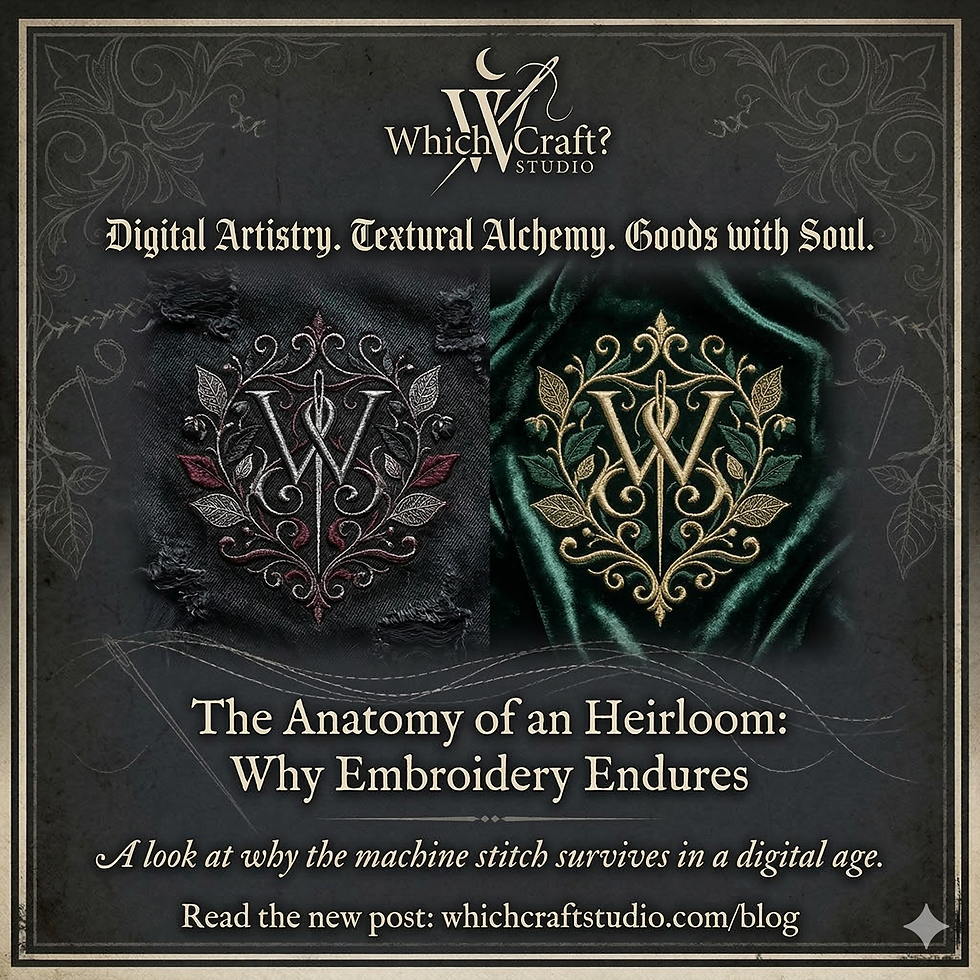
In an era of "fast fashion" and digital prints that crack, peel, and fade into obscurity, there is something profoundly radical about the deliberate journey of a needle through fabric. At WhichCraft? Studio, we don’t just create goods; we curate artifacts. (And let’s be honest: if you’re going to be haunted by your wardrobe, it might as well be by something high-quality.)
To understand why embroidery remains the gold standard of luxury—bridging the gap between ancient craft and the digital age—we must look at its anatomy.
The Soul in the Stitch
Unlike a screen print, which sits precariously on the surface of a garment like a nervous ghost, embroidery is an act of integration. Each thread becomes part of the textile’s DNA. This creates a tactile, three-dimensional depth that demands to be touched. In the dim light of a moody studio, the way high-quality thread catches the shadows is something a digital printer simply cannot replicate—no matter how many "vintage" filters it tries to use.
Built for the Long Haul (And the Afterlife)
There’s a reason museums are filled with centuries-old embroidered tapestries while that t-shirt you bought three years ago is currently serving as a rag.
Structural Durability: High-quality machine embroidery provides a level of precision and tension that ensures the design withstands the rigors of time, washing, and the occasional ritual. It doesn't just last; it remains sharp.
The Heirloom Factor: An embroidered piece carries the weight of intent. By choosing thread over ink, you are choosing a medium that is meant to be kept, passed down, and cherished. It’s the kind of piece your grandkids will fight over in the will.
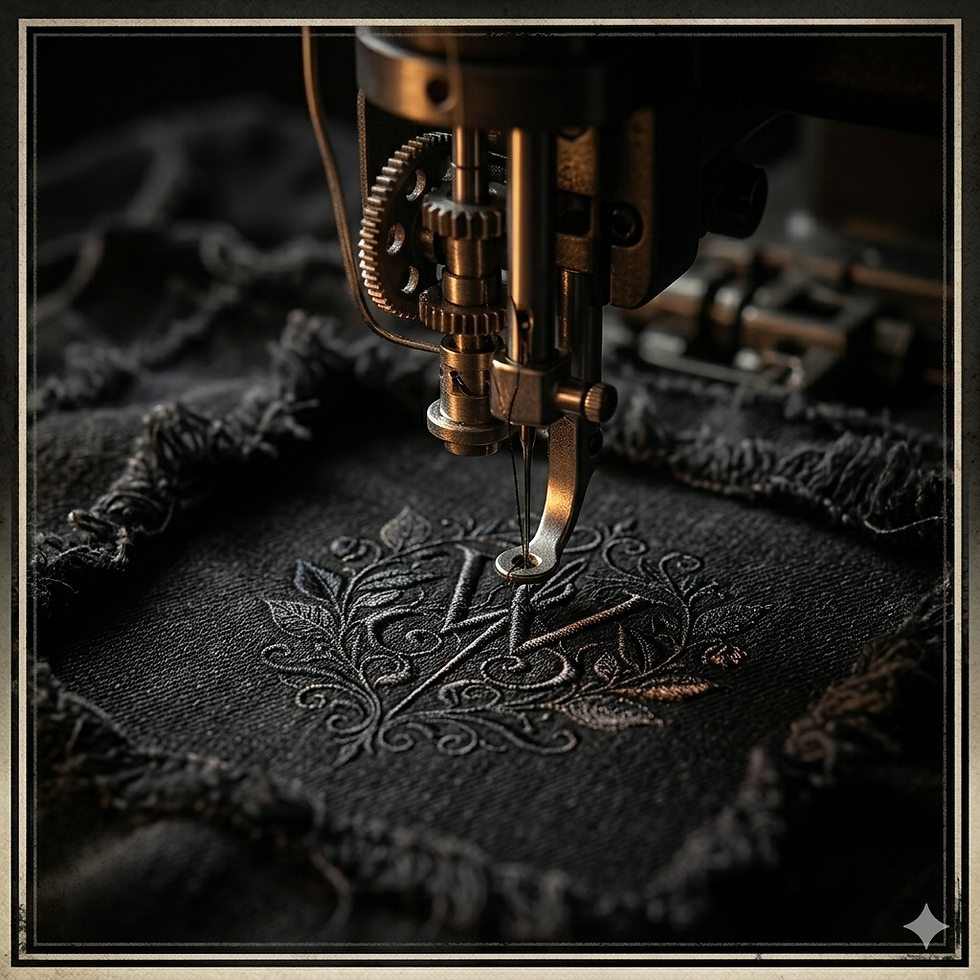
"Transformation of Mediums" you mentioned. It shows a powerful, modern machine needle in mid-stitch, illuminated by a directed candlelight beam. It isn't just stitching thread; it is shown magically binding a silver thread onto raw, weathered black denim, with a complex, alternative sigil already forming. The background shows the blurred gears of your machine, emphasizing that this is digital alchemy.
Digital Artistry: The Alchemy of Texture
At WhichCraft? Studio, we embrace the precision of the digital age. This isn't just about speed; it’s about transformation. A single digitized design can inhabit entirely different worlds based on the "skin" it lives on.
The same sigil that feels raw and rebellious on weathered denim becomes hauntingly elegant when rendered on crushed velvet, or strangely ethereal when captured on industrial screen. It’s the same "soul," just wearing a different outfit.
Beyond the Stitch: Customization Options
The Foundation: Choose the texture that tells your story—from rugged denim and heavy-weight cotton to the luxury of crushed velvet or the unique structure of screen.
The Shadow Palette: Completely shift the mood by swapping our signature "Noir" threads for custom metallic silvers, deep crimsons, or "I-haven't-seen-the-sun-in-weeks" white.
Digital Signatures: Incorporate personalized digitized signatures or meaningful dates to transform a piece into a true one-of-a-kind. (Perfect for marking the date you finally finished that one project.)


Hi, I completely agree about the durability of embroidery, while not hundres of years old, I own my Grandmother's Sherred Beaver full lenght coat, it can from a furier from 5th Ave, NYC NY. Her name is beautifully embroidered inside on the satin lining. While I do not know when the coat was purchased or embroidered, I have a Black and Whit Photograpg of her wearing it dated 1901, so we know it is atleast 125 yrs old ! The fur is increbibly beautiful and in great shape. I do try to wear it at least once a winter in her memory.